
BIDIRECTIONAL CHARGING · VEHICLE-TO-HOME
WHAT IT IS
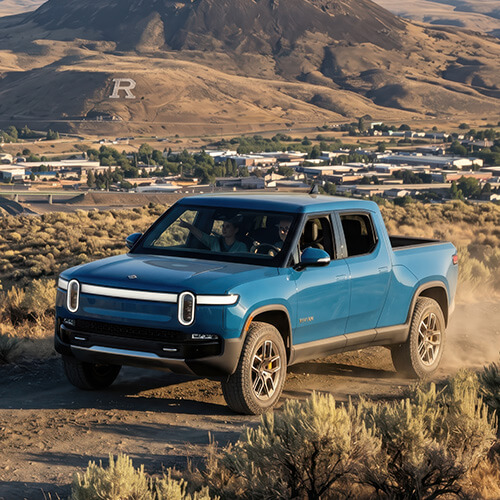
Some electric vehicles can do more than drive—they can help power your home during an outage. Models like the Tesla Cybertruck, Ford F-150 Lightning, and select GM Energy vehicles support vehicle-to-home backup, and RMS installs the equipment that makes it possible.
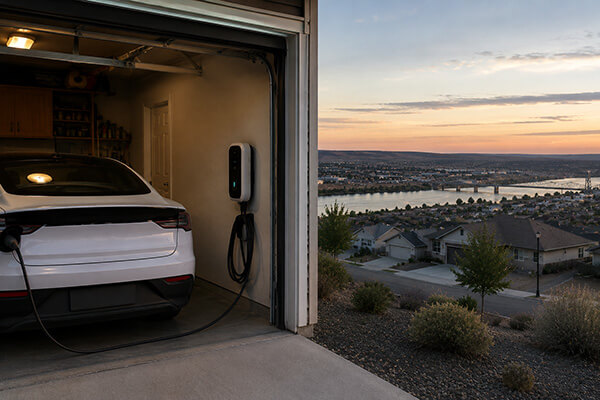
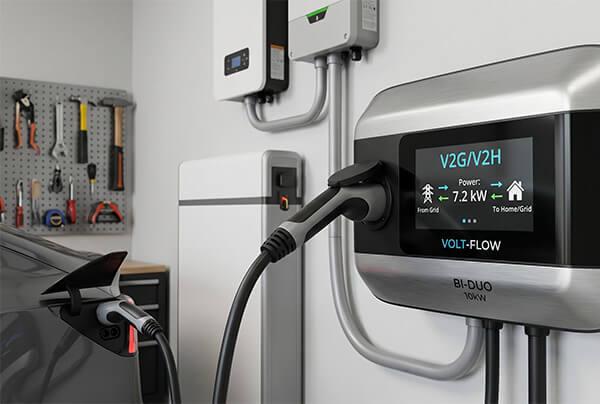
Unlike a standard charger that only sends power to the vehicle, a bidirectional charging system can also send power back to your home. During an outage, the vehicle’s battery can keep essential circuits running, similar to a home battery backup system.
The technology is already arriving in Washington, with utility pilot programs underway and compatible hardware becoming widely available.
SUPPORTED VEHICLES
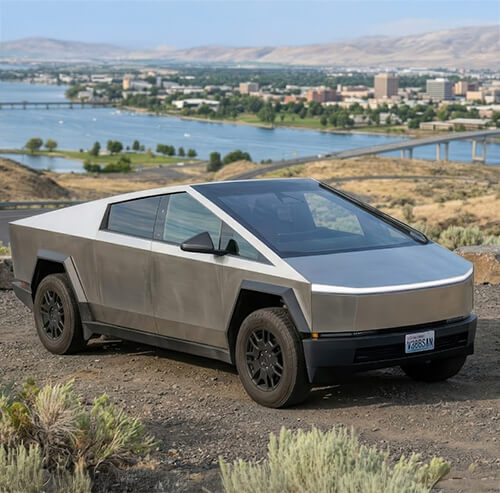
Cybertruck supports vehicle-to-home backup through Tesla’s Powershare system, which uses a Tesla bidirectional charger and a Powershare Gateway to feed the home from the truck’s battery.
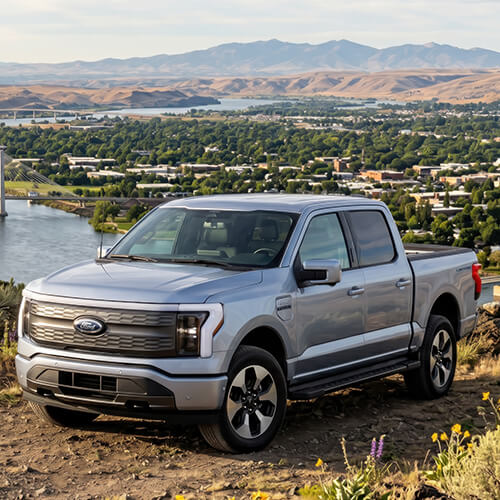
The Lightning supports Ford Intelligent Backup Power, which uses the Ford Charge Station Pro and the Home Integration System to power a home during an outage. Most Lightning trims include the necessary onboard hardware.
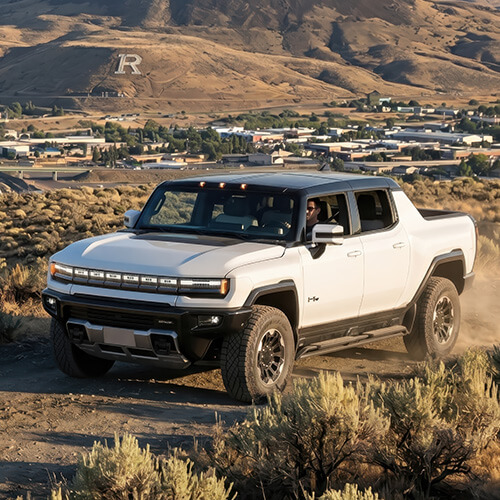
GM Energy’s vehicle-to-home program supports the Chevrolet Silverado EV, the Cadillac Escalade IQ, and other compatible GM EVs through the GM Energy V2H Bundle.
Other manufacturers are following close behind with bidirectional-capable vehicles and matched home equipment. We track the OEM rollouts and install the equipment that’s ready today.
WHAT'S INVOLVED
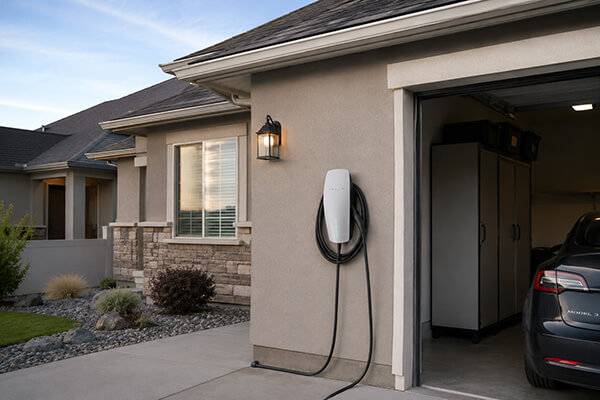
The bidirectional charger replaces a standard Level 2 charger and handles the two-way flow between vehicle and home. Manufacturer-specific — Tesla, Ford, and GM each have their own hardware.
A gateway or transfer device sits between the bidirectional charger and the home's electrical panel. The transfer device handles the switchover from grid power to vehicle power during an outage, and the gateway manages which loads run on the vehicle battery.
Like a Powerwall install, vehicle-to-home backup separates essential loads from non-essential loads. The panel often needs adjusting at the time of install — sub-panel, dedicated backup circuits, or a load-management device depending on the system.
Electrical permit through the local jurisdiction, utility interconnection paperwork where applicable, and a final inspection. We handle the paperwork.
WASHINGTON V2H PILOT
Puget Sound Energy announced Washington’s first vehicle-to-home demonstration in 2026. The pilot validates that the technology is workable on Washington’s grid and gives utility-level visibility into how V2H interacts with home loads and grid stability. It also signals where the regulatory and incentive landscape is moving.
For Tri-Cities homeowners and Washington EV owners, the practical takeaway is that V2H is no longer theoretical. The vehicles support it. The hardware exists. The utility has piloted it. The work now is installing it correctly.
WHY RMS FOR V2H
RMS is Tesla-certified and tracks the bidirectional-charging space across all the major OEMs. The 01 license gives us scope to handle the full electrical side — bidirectional charger, gateway or transfer device, panel and circuit work, permitting, inspection.
V2H installs are not yet routine, and that’s the point. The systems work when an electrician understands both the home’s electrical system and the manufacturer’s hardware. RMS does both.
WHAT IT COSTS, ROUGHLY
V2H pricing depends heavily on the vehicle and the manufacturer’s hardware package. Ford’s Home Integration System, Tesla’s Powershare, and GM Energy’s V2H Bundle each have their own equipment costs, and the home-side electrical work runs separately from the hardware.
Most V2H installs are a one-to-two-day project on site, with permitting and utility paperwork adding a few days on either side. We give you a real number after a quick site visit.
REQUEST A V2H CONSULTATION
Whether you already own a bidirectional-capable EV or you are planning a purchase and want to understand what the install will involve, the first step is a short conversation.
(509) 205-8071